What it looks like
The message, taken apart
This is a reconstruction of the message thousands of students receive every week. Nothing about it is technically clever. It works because it arrives at a moment when you want it to be true.
The one-line version
No legitimate employer in India will ever ask you to pay money in order to be hired.
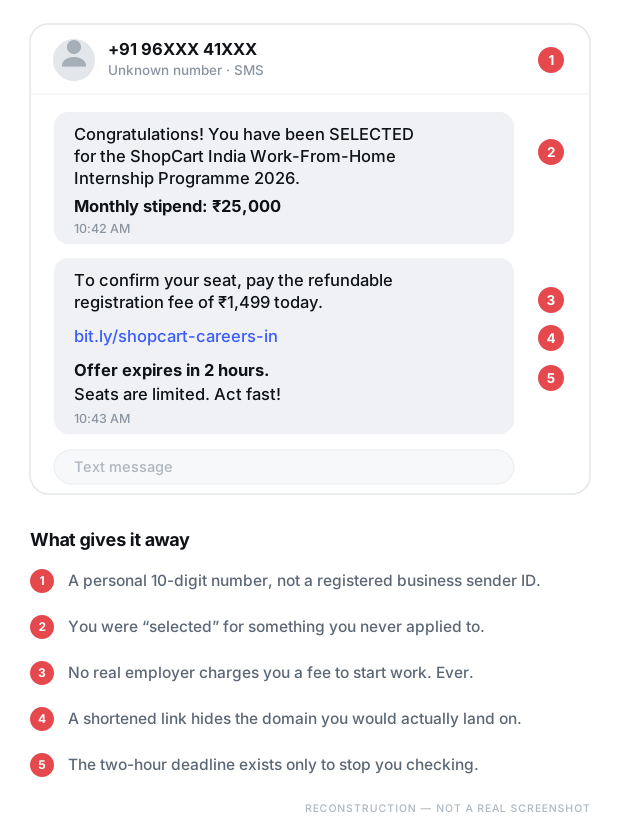
Step by step
How it actually works
The script barely changes between gangs. Once you know the five beats, you can hear it coming from the first message.
01
Your number gets bought
Contact lists leak constantly — job portals, coaching centre databases, college WhatsApp groups, form-filling websites. Messages go out in bulk. If yours has your actual name in it, that is not proof of anything; it just means the leaked list had a name column.
02
The offer is calibrated
The stipend is set high enough to be exciting and low enough to be believable. Work from home, flexible hours, no experience needed. It is engineered to fit a student’s exact situation, which is why it feels personal.
03
A small fee appears
Registration. Security deposit. Training kit. ID card. Background verification. It is always described as refundable, and always small enough that paying feels like a sensible bet against a ₹25,000 stipend.
04
The fee multiplies
You pay once and a second fee appears — a documentation charge, a laptop deposit, a tax clearance. Each one is justified by the money you have already put in. This is the part that turns ₹1,500 into ₹40,000.
05
Everything goes quiet
The number stops replying. The website goes down. The “HR manager” blocks you. By design, there was never anything to deliver.
Red flags
If you see any of these, stop
You don’t need all of them. One is enough to walk away.
You never applied. Companies do not select people who did not apply.
Any payment to get the job. Registration, deposit, kit, verification — all of it. This is the single clearest signal.
HR writing from a Gmail or Yahoo address, or a domain that is nearly-but-not-quite the company’s.
The whole process happens on WhatsApp. No video interview, no HR call from a company line, no formal portal.
A deadline measured in hours. Real offers give you days and put it in writing.
An offer letter with mismatched logos, spelling errors, or no registered address or CIN number.
A shortened link instead of a company careers page.
Before you reply
How to check an offer in five minutes
Do these before you send a rupee or a document. Any one of them will usually settle it.
Search the company name together with the words scam, fraud or review. Students post about these fast.
Look the company up on the Ministry of Corporate Affairs company master data. A real employer is a registered entity.
Find the company’s official website yourself, then call the number listed there — never the number in the message.
Check whether the role actually exists on the company’s own careers page.
Ask for the offer on company letterhead with a named signatory, then verify that person on LinkedIn.
Ask one direct question: “Is any payment required at any stage?” The answer ends the conversation either way.
If it already happened
You paid. Now what?
First, the useful reframe: you were targeted by people who do this full time, using a script refined on thousands of others. The embarrassment is real but it costs you time, and time is the one thing that matters now.
Do this first
Stop paying. Whatever they say next — that one more payment releases the refund, that a case will be filed against you — is part of the same script. Then call your bank to report the transaction, call 1930, screenshot every message, and file at cybercrime.gov.in.
Keep going
Related scams
UPI collect request fraud
A “refund” that quietly sends your money the other way.
OTP & KYC phishing
A lookalike bank link, then a call asking for your OTP.
Fake scholarship & result sites
A lookalike government portal after your Aadhaar and a fee.